The Science Behind Pet Therapy in Care Homes
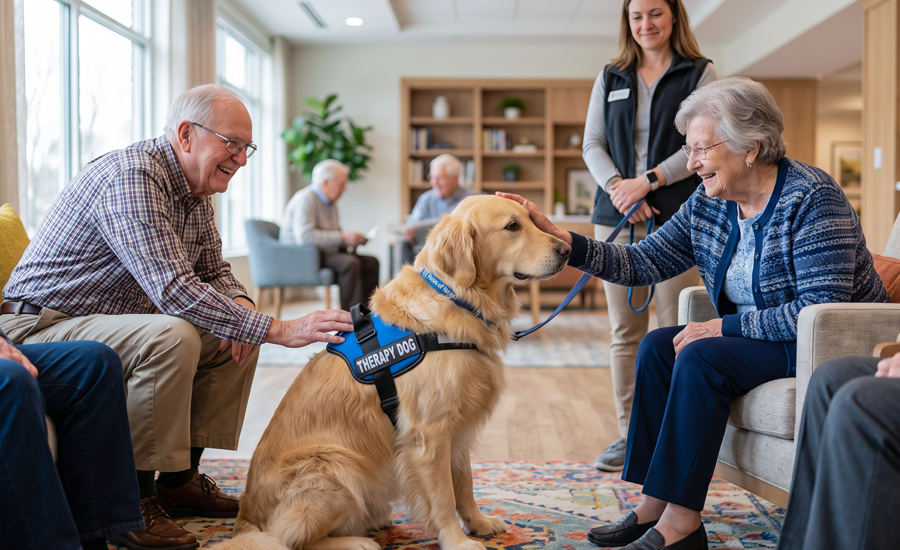
Visits from therapy animals are a popular activity in many care homes and there’s growing scientific evidence to explain why they’re beneficial.
Researchers have been studying how interactions with animals affect our brains, stress levels and emotional well-being. Some of their findings are particularly interesting for older people, including those living with dementia.
So, what happens when residents spend time with therapy animals and what does the research tell us about the benefits? Keep reading as we discuss this topic further.
How Does Pet Therapy Benefit Care Home Residents?
Pet therapy can help care home residents feel more relaxed, improve their mood and encourage them to interact with others. Studies have also found that animal-assisted activities can reduce symptoms of depression in older adults and provide opportunities for reminiscence and sensory engagement among residents living with dementia.
Why Stroking Animals Can Help Us Relax
There’s an interesting biological explanation for why stroking a friendly dog can feel so relaxing.
When we interact positively with animals, our bodies can release oxytocin, a hormone involved in feelings of affection and social bonding. Researchers have also recorded reductions in cortisol, the hormone associated with our stress response.
A 2022 review of human-dog interactions examined these physiological changes and how they relate to emotional wellbeing.
Of course, the response isn’t identical for everyone. A resident who has owned dogs their whole life might feel comfortable around a visiting therapy dog right away, while another might need time to get familiar with it.
This is why residents’ personal experiences with animals are an important consideration when introducing pet therapy.
Pet Therapy and Mental Health
One of the most interesting findings concerns depression in older adults.
A 2026 review involving 2,156 participants across 27 studies found that animal-assisted interventions were associated with significant reductions in depressive symptoms.
The researchers examined studies involving older people in different settings, including residential care, and found encouraging results.
There is also a social element to think about.
When a therapy dog visits a care home, residents have something new to talk about. Someone might recognise the breed and start discussing a dog they owned years ago. Another resident might enjoy asking the handler questions or watching the animal interact with other people.
A visit from a therapy animal can also encourage residents to spend more time together, which is one of the reasons social activities are so important in care homes.
Although studies haven’t consistently shown that pet therapy reduces loneliness, the opportunities for companionship and social interaction are clear.
How Pet Therapy Helps Residents Living With Dementia
Pet therapy in care homes can be particularly beneficial for residents who have dementia, as interacting with animals provides opportunities for engagement that don’t always rely on verbal communication or memory.
Animals can also prompt memories from earlier life. For example, a resident who struggles to remember recent events might recognise a particular dog breed and begin talking about a pet they owned many years ago.
Pet therapy can be part of a wider programme of activities for residents living with dementia, which also includes music, gardening and gentle exercise.
Pet therapy can support residents living with dementia in several ways, including:
✓ Encouraging reminiscence – Seeing or stroking an animal can bring back memories of childhood pets or previous experiences with animals, giving residents an opportunity to talk about their past.
✓ Supporting non-verbal communication – Residents who find conversation difficult can still interact with animals through touch, gestures and facial expressions.
✓ Providing sensory stimulation – Feeling an animal’s fur, listening to its movements and watching it respond to its handler can help residents engage with their surroundings.
✓ Reducing feelings of anxiety – Spending time with a calm, familiar animal can help some residents relax, although responses vary and the research is still developing.
✓ Encouraging social interaction – A visiting animal can become a talking point between residents, relatives and carers, helping people participate in conversations.
✓ Improving mood – Positive interactions with animals can provide enjoyment and comfort. Research has also found that animal-assisted interventions can reduce depressive symptoms in people living with dementia.
✓ Maintaining attention and engagement – Watching an animal perform a familiar command or offering it a treat gives residents a specific activity to concentrate on.
✓ Encouraging gentle movement – Residents who are physically able might reach out to stroke an animal, brush its coat or offer a treat, providing opportunities to use their hands and arms.
A 2026 review of research into animal-assisted interventions for dementia found encouraging evidence for improvements in depressive symptoms, although the effects on agitation and everyday functioning remain less certain.
What Happens During Pet Therapy Sessions in Care Homes
When pets visit care homes, activities can vary depending on residents’ interests and abilities. These might include spending time stroking a visiting animal, helping with simple tasks like brushing its coat or chatting with the handler about pets they’ve owned in the past.
It’s important that residents can decide whether they want to participate. That’s because some residents will have allergies or feel uncomfortable around certain animals, so visits need to be planned carefully with these considerations in mind.
Handlers also have a responsibility to monitor the animal’s behaviour and make sure it remains comfortable throughout the visit.
Depending on their interests and abilities, residents might enjoy:
- Stroking or brushing a therapy dog.
- Offering treats with the handler’s permission.
- Talking about animals they’ve owned.
- Watching a dog perform commands.
- Spending individual time with a visiting animal.
The Benefits of Pet Therapy for Older Adults
Research on pet therapy continues to show promising results, with growing evidence that spending time with animals can improve emotional well-being and reduce depression symptoms in older adults.
For many care home residents, these visits are also something to look forward to. They provide an opportunity to spend time with animals they enjoy and share memories of much-loved pets, as well as getting involved in conversations with others. While researchers are still exploring the full extent of the benefits, it’s clear why pet therapy has become such a welcome addition to activities in many care homes.
Ready to explore...