The Role of Outdoor Spaces in Residential Care Homes
When you think of care homes, you might imagine residents couped up in the same room all day, every day.
This is a huge misconception.
In residential care homes, as well as various activities and social opportunities, gardens and outdoor areas are also used throughout the day, giving residents more options for how they want to spend their time.
Keep reading as we show you how care homes use outdoor spaces as part of daily care, focusing on how they fit into routines, staff support and everyday decision-making.
How do Care Homes Use Outdoor Spaces as Part of Daily Care?
Care homes with well-used outdoor areas treat them as part of everyday care, with residents being encouraged to spend time outside in ways that fit naturally into their day. Time in the garden can support routines, provide a change of setting and help staff respond to residents’ needs as they arise.
Staff usually support residents outside after meals, during quieter periods or when indoor spaces feel too busy. Outdoor areas also give staff more flexibility when providing one-to-one support or helping residents settle.
Using Outdoor Areas to Support Daily Routines
Outdoor time tends to work best when it’s linked to things residents already do at predictable points in the day, such as:
After breakfast
For some residents, breakfast is the point where they feel most ready for the day. And sitting outside for a short time afterwards can become part of the same routine as getting washed and dressed, giving them something nice to look forward to each day. It also gives staff a clear window to offer outdoor time without needing to create a new activity.
After lunch
This is often when communal areas get louder and more crowded as residents gather to watch TV or chat over a cuppa. A few minutes in the garden can be a change of space before the late afternoon settles into a slower routine. It’s also a common time for residents to walk, stretch their legs or sit somewhere quieter.
Before an afternoon rest
A lot of residents like to rest in the afternoon. Outdoor time just before that can help some residents relax and transition more easily into a calmer part of the day. Research in long-term care settings has linked low daytime light exposure with sleep disruption, which is one reason care homes often try to build outdoor daylight into daytime routines where possible.
After visits
Visits can be lovely, but they can also be emotionally tiring for residents in care homes. A short walk or a sit outside afterwards can become a regular ‘cool down’ routine for residents who need a breather before returning to shared spaces.
When routines start to slip
This comes up a lot with dementia. If a resident with the disease becomes more restless at the same time each day, staff can use outdoor time as part of their response. Evidence reviews in care homes have found promising links between garden use and reduced agitation for residents living with dementia.
One evaluation of a therapeutic garden reported mean quality-of-life scores increasing by about 10%, alongside similar reductions in depression scores, with agitation also improving.
Practical Care Tasks That Happen Outdoors
Outdoor areas aren’t only used for activities. In a lot of homes, they’re used for everyday care tasks that are easier outside than in a busy lounge. Some of these include:
Supervised walking and mobility practice
Staff may take a resident out for a short walk on level paths, with stops on benches, making it part of maintaining mobility and confidence without making it a stressful planned exercise session. Walking groups and outdoor walks are also used in some homes as part of keeping residents active.
One-to-one check-ins
Outdoor seating gives staff a much calmer place for a chat or a gentle reset if a resident is unsettled. Interestingly, this is often where staff can easily pick up on mood changes, discomfort or how someone is coping that day.
Therapy and rehab outside (when it’s appropriate)
Some physiotherapy and occupational therapy work can be done outdoors, especially if the purpose is to practise walking, transfers, balance or confidence in a natural environment. Research on long-term care highlights the role of everyday physical activity as part of nursing practice and supported routines.
Everyday tasks moved outside
Simple things like having drinks outside, sitting out after meals or moving a regular conversation outdoors can make the day easier for residents who find indoor spaces overstimulating.
Gardening with a purpose
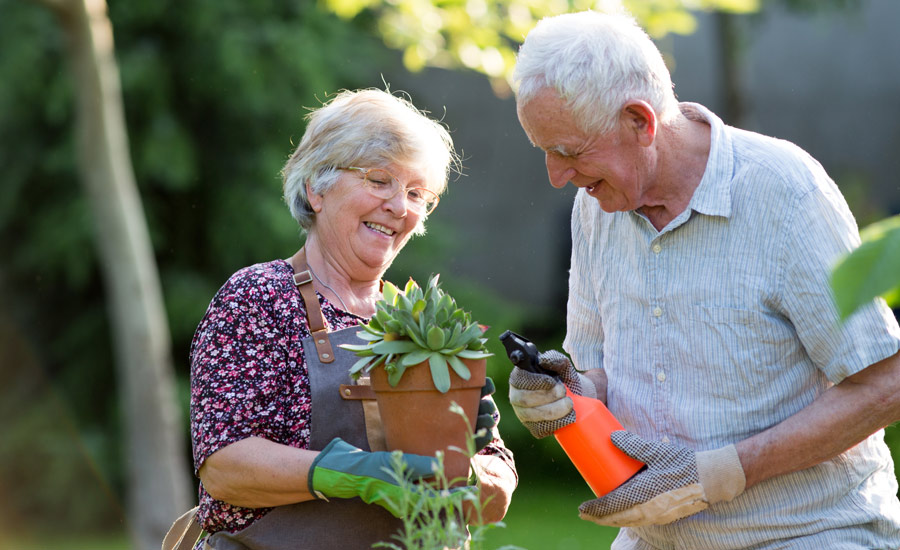
In some homes with gardens, they make extra effort in landscaping and design. And they also get residents involved, including watering, planting, tidying raised beds or seasonal jobs. Studies on horticultural programmes in care settings link this type of activity with better engagement and mood for older residents.
Supporting visits outdoors
Outdoor seating is often used for family visits, especially if the weather is nice or when residents need space away from communal areas. Staff may help with getting coats on, positioning chairs or staying nearby if a resident needs health supervision.
Outdoor Access in Real Care Home Life
To recap, outdoor areas in residential care homes are used in practical, everyday ways.
They give staff another area in the home to support daily routines, giving more options and a change of scenery. Plus, they offer one-to-one time and help residents settle when indoor spaces feel too busy.
Homes should make sure they have clear routes, suitable seating and trained staff who can support residents outside, making outdoor time a solid part of care every day.
Ready to explore...